

































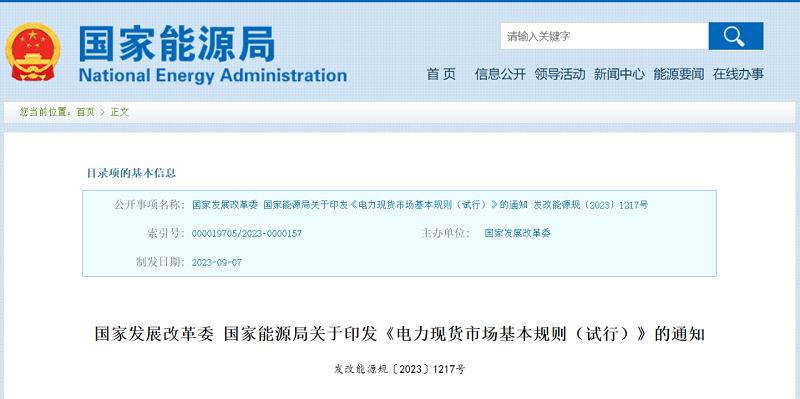
Recently, the National Development and Reform Commission and the National Energy Administration jointly issued the “Basic Rules for Electricity Spot Markets (Trial),” a pivotal document for establishing a unified national electricity market system and the first of its kind in China.
According to the introduction, the Basic Rules primarily regulate the construction and operation of the electricity spot market, covering day-ahead, intraday, and real-time electricity trading, as well as the coordinated integration of spot markets with medium-to-long-term markets and grid companies' power procurement agency services. This establishes a market pricing mechanism that can rise and fall.
Regarding the development path for spot electricity markets, the Basic Rules specify that near-term efforts will focus on advancing inter-provincial, provincial (autonomous region, municipality), or regional market construction. This will promote equal participation in electricity trading by renewable energy sources, new market participants, and various types of users.
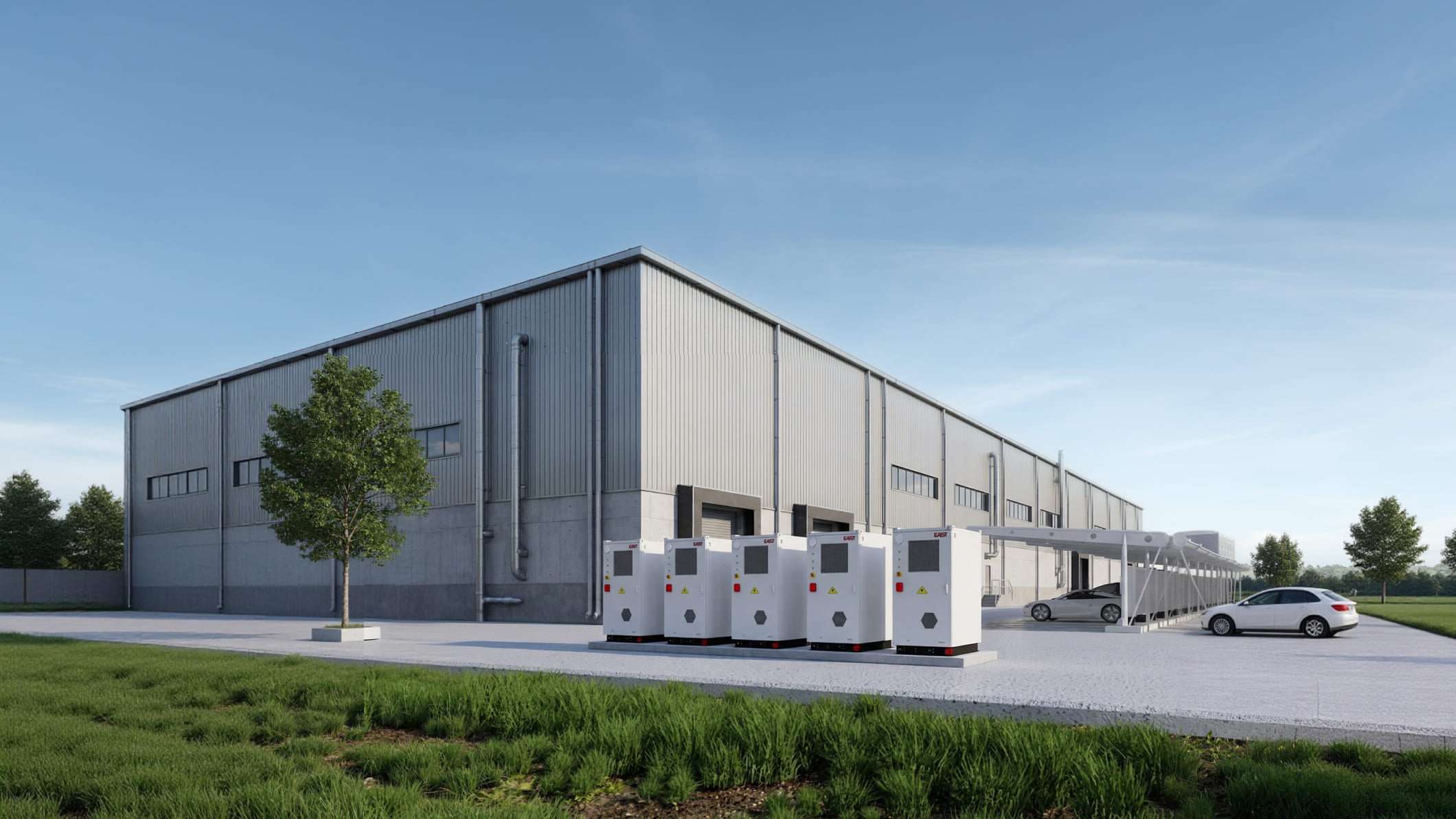
Notably, these Basic Rules expand market access by incorporating new entities such as energy storage facilities and virtual power plants into market transactions.
A relevant official from the National Energy Administration stated that the Basic Rules will systematically advance the participation of new energy in power market transactions, promoting the priority consumption of new energy through market mechanisms to achieve its optimized allocation and coordinated consumption on a larger scale.
Liang Zhipeng, Deputy Director-General of the Department of Legal Affairs and Institutional Reform at the National Energy Administration: Following the release of the Basic Rules for Electricity Spot Markets, these guidelines will direct and facilitate regions in conducting electricity spot trading in an orderly and standardized manner. They will ensure seamless integration between medium-to-long-term transactions, spot transactions, and ancillary service transactions, forming a coordinated market mechanism. This will enhance the completeness and functionality of the electricity market system, thereby better supporting power supply security, safe operation, and green transformation.
The rules indicate that one of the primary tasks in the near-term development of the electricity spot market is to steadily and orderly promote the participation of new energy sources in the electricity market. This involves designing market mechanisms tailored to the characteristics of new energy sources and ensuring seamless integration with existing new energy support policies. Efforts will also be made to facilitate the participation of new market entities such as distributed generation, load aggregators, energy storage, and virtual power plants in trading activities. Medium-to-long-term objectives include continuously refining electricity market mechanisms suited to the new power system. This involves leveraging market-based time- and space-based price signals to achieve flexible interaction and efficient coordination among generation, transmission, load, and storage segments, thereby promoting secure and ample power supply.
The electricity spot market refers to a market where qualified market participants engage in day-ahead, intraday, and real-time electricity energy transactions. Through competition, the spot market establishes market clearing prices that reflect temporal and spatial value, while also facilitating ancillary service transactions such as frequency regulation and reserve capacity.
Participants in the electricity spot market include market entities, grid companies, and market operators. Market entities encompass various types of power generation enterprises, electricity consumers (including grid companies' proxy-purchased electricity users), electricity retailers, and new market participants (such as distributed generation, load aggregators, energy storage, and virtual power plants). Market operators consist of power dispatch agencies and power trading institutions.
Key Tasks for the Recent Development of Electricity Spot Markets:
(1) Establish inter-provincial and provincial/regional spot markets under the framework of “unified market, coordinated operation,” and develop well-functioning day-ahead, intraday, and real-time markets.
(2) Strengthen the linkage between medium-to-long-term markets and spot markets, clarifying medium-to-long-term time-of-use trading curves and transaction prices.
(3) Ensure seamless integration between ancillary service markets (e.g., frequency regulation, reserve capacity) and spot markets. Enhance convergence between spot markets and peak-shaving ancillary service markets, promoting joint clearing of spot and ancillary service markets.
(4) Advance retail electricity market development to facilitate price transmission between wholesale and retail markets.
(5) Steadily and orderly promote the participation of new energy sources in the power market, design market mechanisms adapted to the characteristics of new energy sources, and ensure coordination with new energy guarantee policies; encourage new market participants such as distributed generation, load aggregators, energy storage, and virtual power plants to engage in trading.
(6) Direct market participants—including power users, electricity retailers, and agency-purchased electricity users—shall participate equally in spot transactions and bear responsibilities fairly. Separate accounting shall be implemented for deviation volumes of agency-purchased electricity users, residential users, and agricultural users. Deviation volumes of agency-purchased electricity users shall be settled at spot prices, while additional gains or losses (including deviation charges) incurred to stabilize residential and agricultural electricity prices shall be shared or borne by all industrial and commercial users.
(7) Gradually introduce other market participants into interprovincial markets, opening participation to all types of power generation enterprises, users, and electricity retailers. Balance the interests of both sending and receiving regions, strengthening dynamic coordination between interprovincial markets and provincial/regional markets in areas such as economic responsibility and price formation mechanisms.
Interconnection of Power Procurement Agents with Spot Markets
Electricity grid companies shall regularly forecast electricity consumption and typical load curves for commercial and industrial users whose electricity is procured on their behalf. They shall account for seasonal variations, holiday schedules, and other factors to forecast consumption by time segment. Through participation in centralized on-exchange trading (excluding matching transactions), they shall procure electricity on behalf of these users, establishing time-of-use contracts.
Deviation volumes arising from electricity procurement on behalf of commercial and industrial users shall be settled at spot market prices.
Any additional gains or losses incurred to maintain stable residential and agricultural electricity prices shall be shared or borne by all commercial and industrial users.
Integration of the ancillary services market with the spot market
During the initial phase of the spot market, frequency regulation and reserve ancillary service markets may clear independently from the spot market. When conditions permit, these markets shall clear jointly with the spot market.
During spot market operations, where system peak shaving functions are fully achieved through electricity energy market mechanisms, peak shaving ancillary service categories shall in principle no longer be established in parallel with the spot market.
In regions where the spot market operates, ancillary service costs shall be shared by both generators and consumers based on fair and reasonable principles.
Capacity Compensation Mechanism and Spot Market Integration
Provinces (autonomous regions, municipalities)/regions shall, in accordance with national overall arrangements and based on actual needs, explore establishing market-based capacity compensation mechanisms to incentivize investment in various power generation sources, ensure adequate system generation capacity, and maintain regulatory capabilities and operational safety. Regions operating spot markets shall ensure seamless integration between market price caps, market settlement, generation cost surveys, and capacity compensation mechanisms. Where conditions permit, capacity markets may be explored.
Responsible Officials from the National Development and Reform Commission and the National Energy Administration Answer Questions from Reporters on the “Basic Rules for Electricity Spot Markets (Trial)”
Recently, the National Development and Reform Commission (NDRC) and the National Energy Administration (NEA) jointly issued the Basic Rules for Electricity Spot Markets (Trial) (hereinafter referred to as the Basic Rules). What arrangements have been made in the Basic Rules to standardize the construction and operation of electricity spot markets? Our reporter interviewed relevant officials from the NDRC and NEA.
Q: What was the background for formulating the Basic Rules?
Answer: In 2015, the “Several Opinions on Further Deepening Power System Reform” issued by the CPC Central Committee and the State Council proposed accelerating the establishment of an effective competitive market structure and system. In 2022, the “Guiding Opinions on Accelerating the Construction of a Unified National Power Market System” called for expediting the development of a multi-tiered unified power market system. Also in 2022, the “Opinions on Accelerating the Construction of a Unified National Market” issued by the CPC Central Committee and the State Council proposed building a unified national energy market. Currently, China's multi-tiered unified power market system has taken initial shape: trading products cover medium- and long-term power, spot power, and ancillary services; trading scope spans inter-provincial and intra-provincial markets; market participants have expanded to include new entities such as virtual power plants and independent energy storage facilities; trading institutions operate with relative independence and standardization; a market-based mechanism for determining electricity prices has taken preliminary form; and the decisive role of the market in optimizing resource allocation is gradually emerging.
As a “barometer” reflecting power supply and demand conditions, the spot electricity market has extended its trial operation periods, diversified its participants, and increasingly demonstrated the guiding role of market prices in optimizing power generation and consumption behaviors. Regions including Shanxi, Gansu, Shandong, Inner Mongolia West, and Guangdong have entered uninterrupted settlement trial operations. The electricity spot market has achieved the following significant outcomes: First, it has effectively enhanced resource allocation efficiency, driving the transformation of power production organization from traditional planned models to market-based approaches. Spot market clearing results are directly applied to grid dispatch operations, promoting deep integration between market operations and system operations. Second, it has effectively enhanced security of supply during peak demand periods. The time-of-use price signals in the spot market accurately reflect supply-demand conditions, guiding thermal power plants to generate during peak hours and encouraging electricity users to reduce consumption through short-term high-price signals. Third, it has effectively incentivized flexible resources to participate in system regulation, aiding renewable energy integration. During periods of high renewable generation, spot market price signals guide thermal power plants to reduce output and electricity users to increase consumption, thereby expanding the space for renewable energy integration.
Overall, pilot regions implementing long-cycle settlement during the spot market trial phase have conducted distinctive exploratory practices, accumulating valuable experience for subsequent market development. To further consolidate market development achievements, deepen consensus on market construction, and promote the steady and orderly realization of full coverage of electricity spot markets, the National Development and Reform Commission and the National Energy Administration have formulated the Basic Rules. These rules provide further standardized guidance for regions that have achieved continuous operation of electricity spot markets, ensuring healthy and sustainable development. They also offer referenceable experience for regions yet to launch electricity spot markets, thereby reducing trial-and-error costs.
Q: What is the significance of the introduction of the Basic Rules?
Answer: The introduction of the Basic Rules holds four significant implications.
First, it guides and standardizes the development of electricity spot markets to establish a unified national electricity market system. By comprehensively summarizing the successful experiences from pilot spot market initiatives, it further consolidates consensus on spot market development and guides local regions in establishing electricity spot markets tailored to their specific conditions. Guided by the Basic Rules, the advancement process for electricity spot markets is optimized, and the formulation of spot market rules is standardized. This involves designing an integrated rule system covering market entry and exit, trading products, trading sequences, trade execution and settlement, and technical standards for trading. It actively promotes the integration of power markets, accelerates the construction of a unified national power market system, and facilitates the optimal allocation of resources across a broader scope.
Second, it enhances the capacity for secure power supply and supports national energy security. In the long term, market-oriented reforms are an effective means to ensure energy security. As a core measure of market-oriented reform, the development of spot power markets plays a crucial role in safeguarding the security of power supply. Specifically, The spot electricity market establishes a flexible pricing mechanism that can rise or fall. Leveraging time-of-use price signals, it dynamically reflects market supply-demand conditions and trends in primary energy prices. Through short-term peak price signals, it effectively incentivizes thermal and gas-fired units to generate during peak periods while encouraging electricity users to shift consumption to off-peak hours. This significantly enhances power supply reliability, supporting high-quality economic and social development.
Third, it builds a power market system conducive to renewable energy development, supporting the construction of a new power system. Market mechanisms adapted to the characteristics of renewables leverage the role of time-of-use price signals in spot markets to encourage greater operational flexibility in thermal units. This promotes coordinated interaction among generation, grid, load, and storage, fully unleashing the system's overall regulatory capacity. Orderly participation of renewables in power market transactions is facilitated, using market mechanisms to prioritize the consumption of lower variable-cost renewables. This achieves optimized allocation and coordinated consumption of renewables across broader regions.
Fourth, effectively stimulate market vitality by exploring new models and mechanisms for novel market participants. Adapting to the development needs of new entities such as energy storage and virtual power plants, continuously optimize market mechanisms. Independent energy storage facilities and virtual power plants can now autonomously participate in spot market bidding and engage in system flexibility regulation based on spot market time-of-use price signals. Looking ahead, as market mechanisms become further established and refined, the time-of-use price signals in the spot market can better incentivize new market participants to fully leverage their flexible regulation capabilities. This will guide users toward flexible electricity consumption, effectively enhance the stability and flexibility of the power system, and achieve flexible interaction across all links—generation, grid, load, and storage—thereby providing a mechanism to support the development of a new power system
Q: What is the scope of application and main content of the Basic Rules?
Answer: The Basic Rules primarily regulate the establishment and operation of electricity spot markets, including day-ahead, intraday, and real-time electricity energy trading, as well as the coordinated integration of spot markets with medium-to-long-term markets, ancillary services, and grid-enterprise proxy power purchases. They apply to provincial (regional, municipal)/territorial spot markets adopting a centralized market model, as well as the integration between provincial (regional, municipal)/territorial spot markets and related markets.
The Basic Rules comprise thirteen chapters with 129 articles and an appendix of definitions, covering four main aspects:
First, it clarifies the development path for electricity spot markets. The Basic Rules prioritize the near-term advancement of inter-provincial and provincial (autonomous region, municipality)/regional market construction. Starting with a “unified market, coordinated operation” approach, it strengthens the integration of medium-to-long-term, spot, and ancillary service transactions, facilitates price transmission between wholesale and retail markets, and promotes equal participation in electricity trading by new energy sources, new market participants, and all types of users. The development of medium- and long-term spot markets must adapt to the operational requirements of the new power system, achieving flexible interaction and efficient coordination among generation, grid, load, and storage components. This will foster a market environment characterized by equal competition and autonomous choice, gradually promoting the integration of inter-provincial and provincial/regional markets, and advancing the comprehensive establishment of a unified national power market system.
Second, standardize the design of electricity spot market mechanisms. Expand market access to include new market participants such as virtual power plants. Standardize market price cap mechanisms by clarifying principles for setting and adjusting price limits. Promote market integration by establishing fundamental requirements for linking spot trading with medium-to-long-term and ancillary service transactions. Refine market settlement management by specifying settlement procedures and methods.
Third, clarify operational requirements for electricity spot markets. Specify that spot markets must sequentially undergo simulated trial operation, settlement trial operation, and formal operation. Standardize work content and related requirements for each phase—covering rule systems, information disclosure, technical support systems, personnel training, metering management, and market intervention—to ensure steady and orderly progress in spot market development.
Fourth, standardize terminology related to electricity spot markets. Through glossary definitions, certain terms related to the electricity spot market are uniformly standardized, effectively resolving issues such as multiple terms for a single concept, ambiguous meanings, or unclear definitions. For example, the “wholesale electricity energy market” previously had multiple interpretations but is now uniformly defined as the market where power transactions occur between power generation enterprises and wholesale electricity users or power retailers. This market specifically encompasses two transaction types: medium- and long-term electricity energy trading and spot electricity energy trading.
Q: What are the main institutional designs of the Basic Rules?
Answer: In light of the new circumstances and requirements arising from the “dual carbon” goals and the development of a new power system, the Basic Rules primarily introduce three key institutional designs.
First, addressing issues such as the need for further clarification on the path to establishing a unified national power market system and the requirement for standardizing the construction and operation processes of power spot markets, the Basic Rules clearly define the near-term and long-term key tasks for power spot markets. It specifies the launch conditions and work content for different phases—including simulated trial operation, settlement trial operation, and formal operation—covering aspects such as market rule publication, technical support system development, training for market participants and rule dissemination, market operation analysis, and market risk prevention and control.
Second, addressing the need for integrated market advancement—particularly strengthening coordination between spot trading and related transactions/mechanisms—the Basic Rules include a chapter on market linkage mechanisms. It establishes consensus-based principles for integrating spot markets with medium/long-term trading, ancillary services, power procurement agency services, and capacity compensation. For instance, medium- and long-term transactions must specify key elements such as time-of-use electricity volumes, time-of-use prices, and settlement reference points. The rules also promote joint clearing of frequency regulation, reserve, and ancillary services with the spot market, and explore establishing a market-based capacity compensation mechanism.
Third, to address market operational risk prevention, the Basic Rules include a chapter on risk prevention and control. This chapter proposes prevention and disposal mechanisms for classified market risks, clarifies the responsibilities of the National Energy Administration's dispatch offices, relevant provincial (regional, municipal) authorities, and market operators in risk prevention, and establishes the principle that market risk monitoring should focus primarily on pre-event and during-event stages, while risk disposal should concentrate on during-event and post-event stages
Q: How can we effectively advance the implementation of the Basic Rules going forward?
Answer: The National Development and Reform Commission and the National Energy Administration will work with relevant local government departments and the National Energy Administration's local offices to implement the Basic Rules in a manner tailored to local conditions. On one hand, they will guide regions already engaged in long-cycle settlement pilot operations to further refine their rule systems based on the Basic Rules. Building upon the ongoing pilot operations for long-cycle settlement in spot markets, these regions will explore innovations in areas such as facilitating market participation by new energy sources and new market entities, and enhancing coordination between wholesale and retail markets. On the other hand, they will steadily and orderly expand the scope of spot markets, guiding other regions to develop their electricity spot market rule systems and advance market construction and operation by referencing the Basic Rules. This will accelerate the refinement of key market mechanisms and expedite the launch of spot market pilot operations.
Concurrently, the National Development and Reform Commission and the National Energy Administration will closely monitor the development and operation of electricity spot markets across regions, as well as the implementation of the Basic Rules. They will conduct timely summaries and evaluations, dynamically revise the Basic Rules in response to new circumstances and requirements, continuously improve the policy framework for electricity spot markets, enhance coordination and integration among various markets, and accelerate the establishment of a unified national electricity market system.
The original text is as follows:
Notice of the National Development and Reform Commission and the National Energy Administration on Issuing the Basic Rules for Electricity Spot Markets (Trial)
Development and Reform Commission Energy Planning [2023] No. 1217
Development and Reform Commissions and Energy Bureaus of all provinces, autonomous regions, municipalities directly under the Central Government, and the Xinjiang Production and Construction Corps; Economic and Information Commissions (Bureaus of Economy and Information Technology, Industry and Information Technology, Economy and Information, or Industry and Information Technology) of Tianjin Municipality, Liaoning Province, Shanghai Municipality, Chongqing Municipality, Sichuan Province, and Gansu Province; All Dispatch Offices of the National Energy Administration, State Grid Corporation of China, China Southern Power Grid Co., Ltd., China Huaneng Group Co., Ltd., China Datang Corporation Limited, China Huadian Corporation Limited, National Energy Investment Group Co., Ltd., State Power Investment Corporation Limited, China Three Gorges Corporation, China National Investment Corporation, China National Nuclear Corporation, China General Nuclear Power Group, China Resources (Holdings) Company Limited, and Inner Mongolia Electric Power (Group) Co., Ltd.:
To accelerate the development of the power market and standardize the operation and management of the power spot market, we have formulated the Basic Rules for the Power Spot Market (Trial). These rules are hereby issued to you for implementation.
National Development and Reform Commission
National Energy Administration
September 7, 2023